
7 QA Blind Spots Hurting Global Reliability
Every QA in global releases tells two stories: the one the teams plan for and the one users experience. And often, those stories don’t match.


Even leading brands with mature QA processes experience failures that damage trust, such as payments timing out in Southeast Asia, text breaking layouts in Arabic, or app crashes on older Android versions. These issues don’t appear because teams are careless. They happen because global app quality risks multiply faster than internal QA capacity can keep up.
These usability and performance issues across regions directly impact release confidence and raise questions about the overall QA process.
This article serves as a checklist to help strengthen QA in global releases and achieve consistent confidence and reliability across markets.
TL;DR
- Global releases often fail because of invisible QA gaps, such as limited device or network coverage, untested payment methods, lack of in-market testers, and insufficient localization testing.
- Over-reliance on automation and episodic QA creates a false sense of readiness.
- Managed crowdsourced QA, like Testlio, rebuilds release confidence by combining global testers, real devices, and continuous quality insights.
Let’s dive in!
The Hidden Costs of QA Gaps
Your existing test plan might sustain regional stability, but global expansion changes the equation. QA teams must design coverage that reflects real-world diversity from languages and currencies to device fragmentation, OS variations, and international compliance before claiming global readiness. Each of these testing layers increases the potential for failure points.
A minor usability bug in one region might look insignificant until it disrupts a critical user flow and impacts brand trust.
In 2025, 46% of teams replaced 50% or more of their manual testing with automated tests, according to the Test Automation Statistics report. These shifts help, but automation alone can’t guarantee global release reliability (device variety, localization, and edge cases still matter).
This affects release confidence, even when test cases indicate a 100% pass rate, because the gap lies at the test-coverage level rather than in the extent of automation applied to existing test cases.
Let’s break down the seven factors driving the loss of reliability.
7 Things Costing You Confidence and Reliability in Global Releases
True confidence comes from testing that mirrors how global users interact with the product. While traditional QA verifies functionality, modern quality strategies validate real-world experiences. It verifies that features function, workflows are complete, and defects are identified before release.
Below are seven overlooked areas that affect confidence and reliability in releases, along with how modern QA leaders address them.
1. Limited Real-World Device Coverage
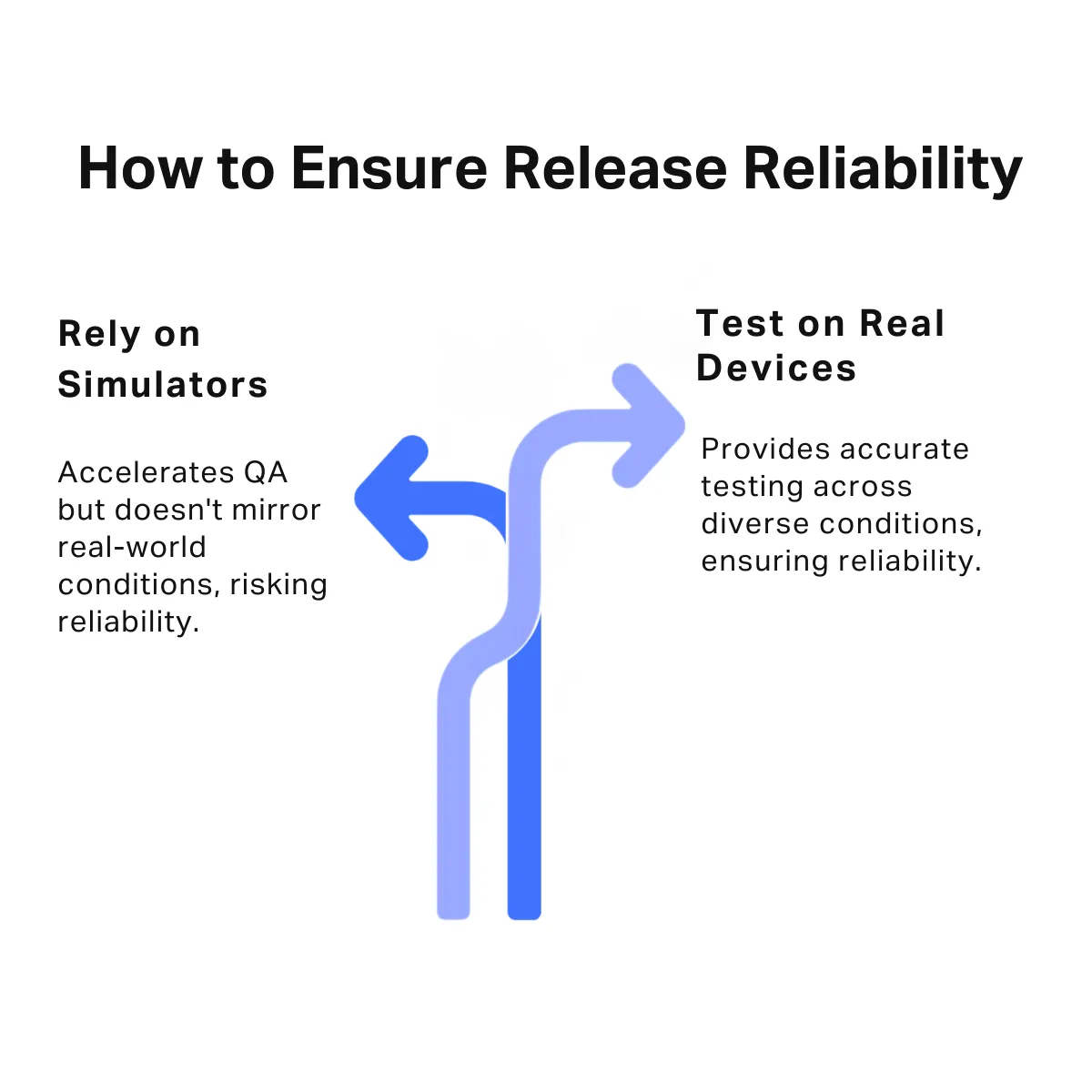
Real-world device coverage spanning low-end Android phones, iOS devices, regional carriers, and older OS builds is what separates confident releases from risky ones. Simulators and emulators accelerate QA cycles but can’t mirror the real devices.
Your customers operate across diverse devices, OS versions, and network conditions that internal QA teams cannot replicate. This risks assuming release reliability instead of demonstrating or testing it.
How modern QA teams respond: Enterprise teams solve this problem through crowdtesting and partnering with a managed testing partner. These managed networks connect engineering teams with thousands of expert testers who use real devices under real-world conditions, such as several apps running in the background. This ensures your product isn’t just working, but performing reliably in a realistic environment.
2. Payment Testing Gaps Across Markets
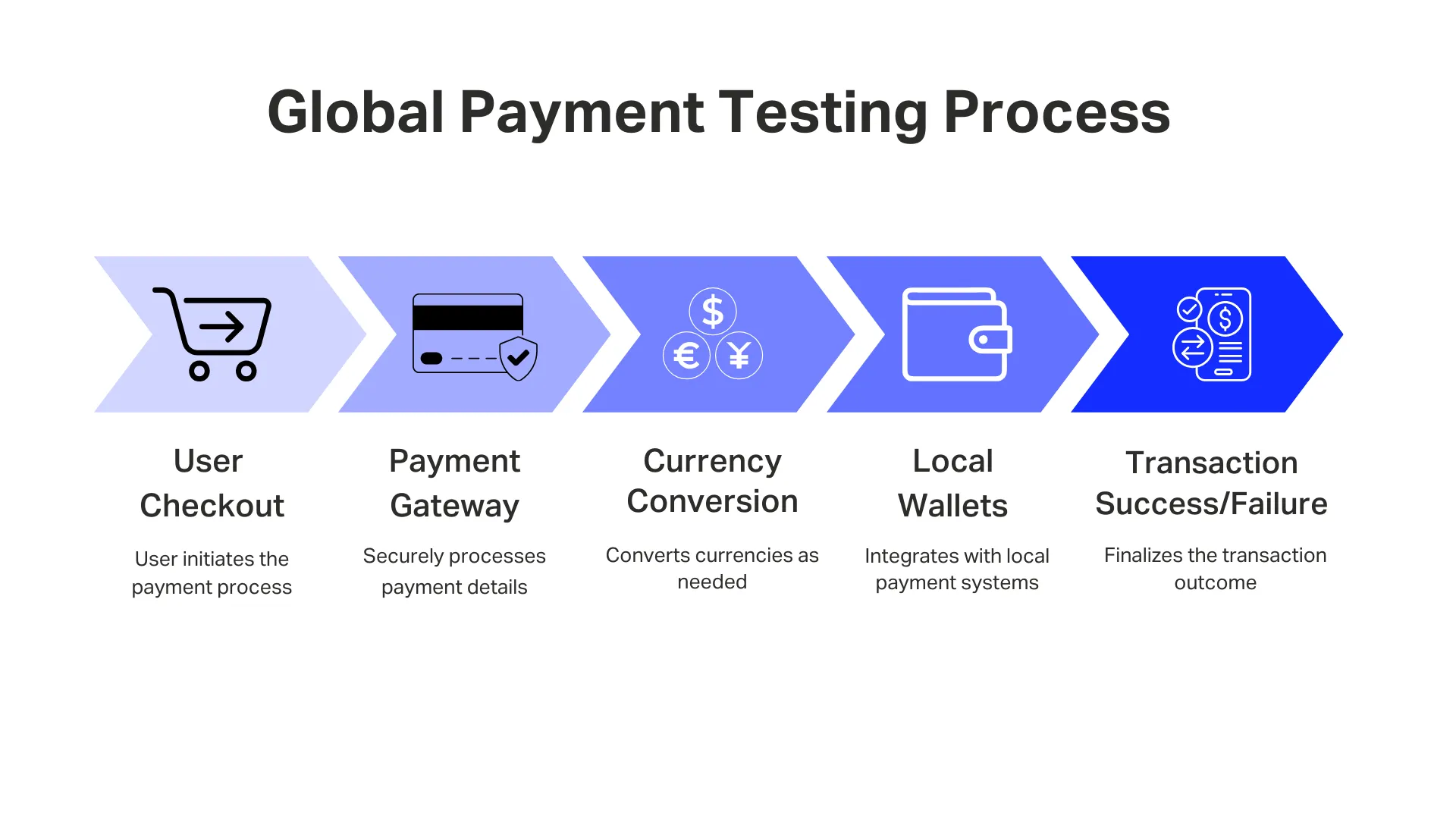
Payment ease and reliability are the heartbeat of e-commerce apps and the most common failure point during launches. Yet, many teams test only popular gateways, ignoring local wallets, debit systems, or regional currency behavior.
This results in unexpected transaction failures, refund errors, and abandoned carts. Each untested payment method means lost revenue and diminished trust. For example, a European app launch might pass QA but fail in India if UPI or Paytm isn’t validated.
How modern QA teams respond: Global QA partners validate end-to-end payment experiences from checkout to settlement across real accounts, devices, and currencies. Through managed Functional Testing Services and payment QA solutions, teams ensure every transaction succeeds under real-world conditions.
3. Lack of Localized Testing and Contextual Insight
Localization is not only about translation but also usability in a regional context. Many apps pass translation checks but still feel foreign to local users. Common issues include truncated text, right-to-left layout errors, or missed cultural nuances that quietly damage user trust.
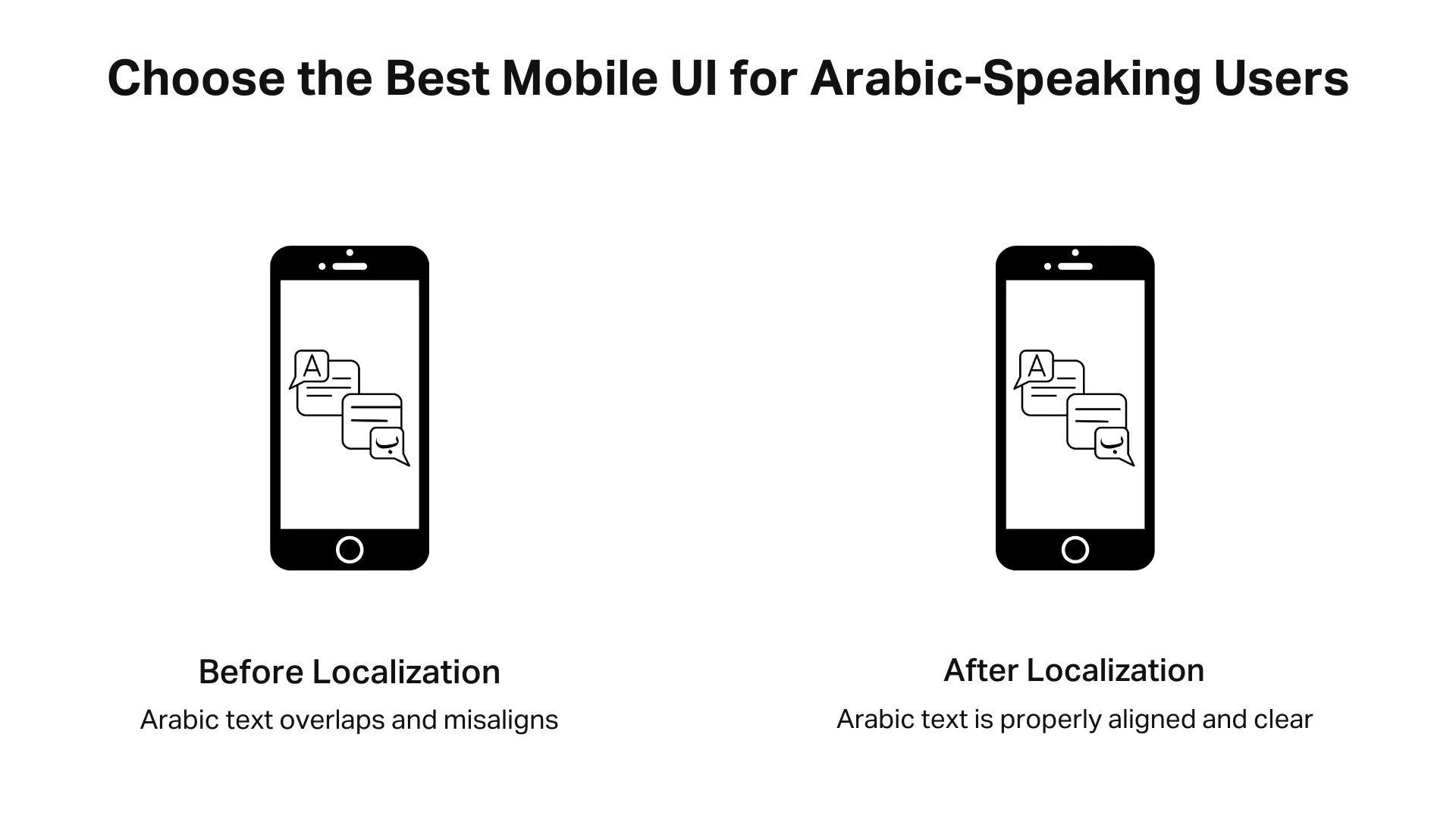
You need to consider how users from each region interpret the user interface. For example, date formats or color associations can change meaning across markets. A red “confirm” button may work in the U.S., but can signal “cancel” in East Asia.
How modern QA teams respond: Leading QA teams embed native testers from target regions to validate not just language, but also usability, flow, and cultural fit.
4. Over-Reliance on Automation
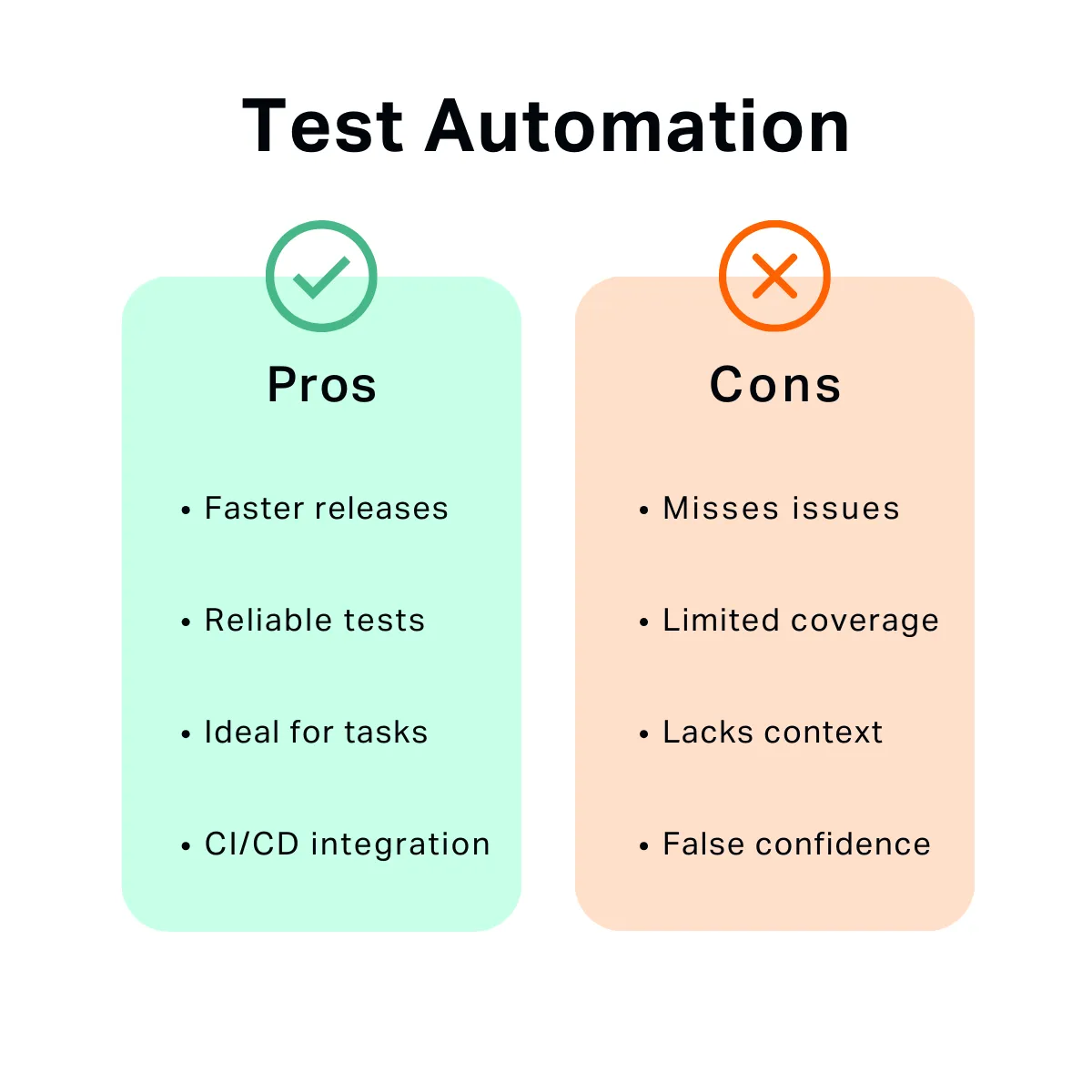
Automation testing accelerates delivery but works within defined boundaries. Over-reliance on scripts often overlooks edge cases, layout inconsistencies, network fluctuations, or accessibility gaps, creating a “green build” that conceals real-world friction.
In a large sports-streaming app project, a global QA team uncovered livestream and buffering issues on lower-end Android devices that automated testing missed, preventing post-launch user complaints and retention drops.
How modern QA teams respond: They treat automation as an accelerator, not a replacement for human validation. Modern QA networks combine automated testing services with exploratory testing networks to strike a balance between precision and perception. Automation validates the repeatable; humans capture the unpredictable, ensuring both speed and empathy in global QA.
5. Episodic, Not Continuous QA
Episodic QA means testing is done periodically, often just before releases or after significant code changes, rather than as part of the software development life cycle. For teams considering global product launches, episodic QA is a liability rather than a process.
When QA dashboards show metrics without meaningful high defect counts, fluctuating pass rates, and no clear context, teams struggle to gauge release confidence. Tight deadlines then force reactive fixes instead of thoughtful testing, resulting in products that launch on time but not always with trust.
How modern QA teams respond: By continuously embedding QA from feature design through post-release monitoring, they achieve both agility and assurance. QA testing partners' managed approach operationalizes this shift; distributed experts execute test runs in parallel with active development, closing feedback loops and preventing regression debt from piling up.
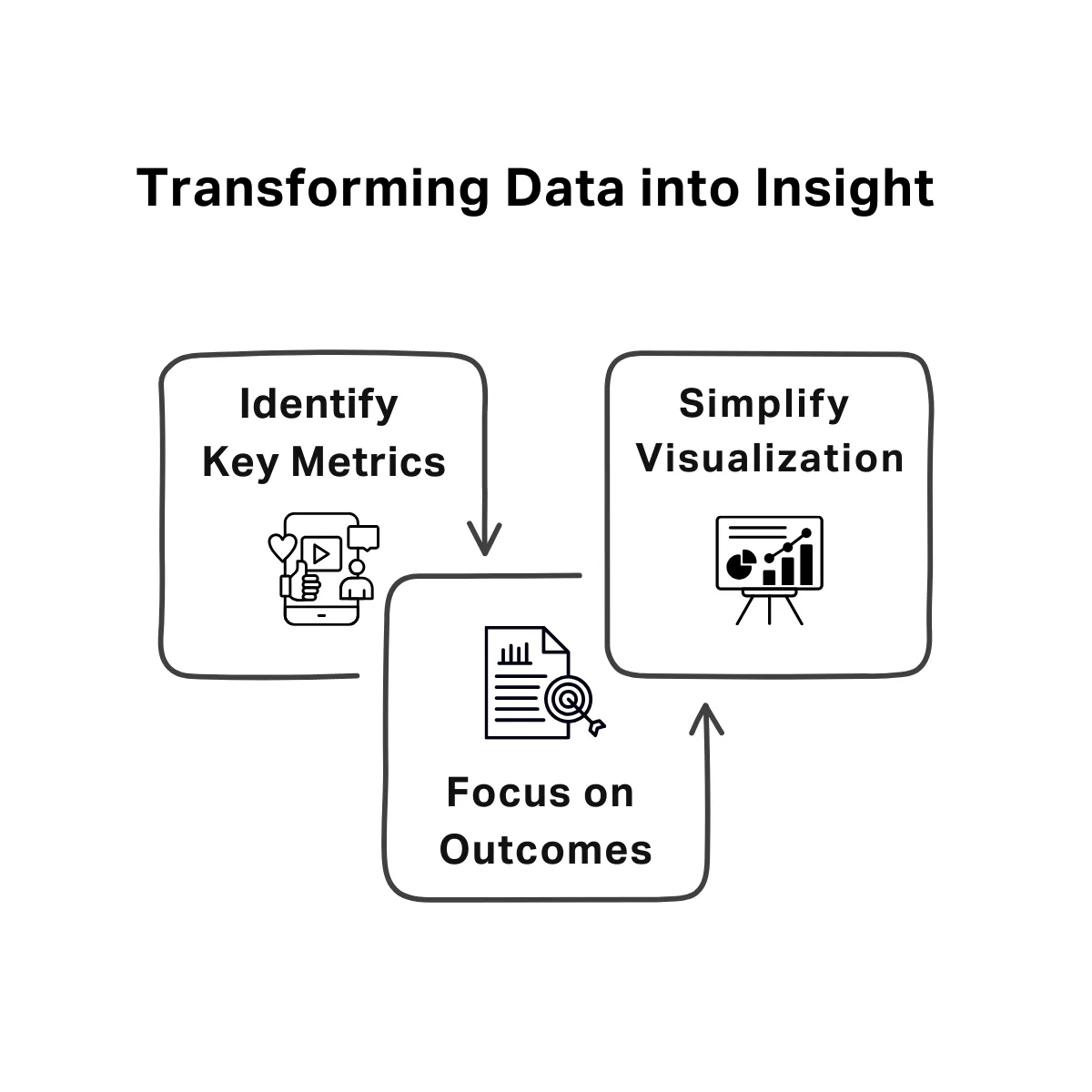
6. Signal Overload Without Clear Metrics
Quality assurance is still treated as a final checkpoint in many teams’ workflows. Development focuses on building first, testing later, and fixing issues under deadline pressure. The software development life cycle typically starts with the creation of a product.
When the product finally goes live, its real performance depends less on preparation and more on post-release hope.
When QA is activated only at the end of development, defects discovered late can ripple into production, eroding confidence and slowing future releases. This approach leaves quality exposed to timing pressures, last-minute fixes, and untested user flows.
How modern QA teams respond: They move beyond one-time testing to adopt continuous QA, a proactive, always-on model that scales with the development team. With a managed network, continuous test cycles run in tandem with code changes, providing faster insight and fewer surprises before launch.
This evolution turns QA into a constant conversation among developers, testers, and users, driving both speed and reliability across global releases.
7. Scaling Challenges With Global Teams
One of the top QA challenges is scaling the QA team as the testing needs grow. This is because global QA often spans across time zones, languages, and working styles. This requires larger testing teams and good coordination with vendors.
Internal teams juggle multiple releases, testing and localization cycles, and late-night coordination with offshore partners. These logistics bottlenecks lead to delays, miscommunication, and coverage gaps, especially when local expertise is missing.
How modern QA teams respond: Managed QA networks, like Testlio’s, orchestrate distributed global teams of vetted professionals. Testing happens around the clock, coordinated through unified test management and expert oversight.
This results in 24/7 test execution, faster feedback loops, and a seamless QA process that scales without friction.
How to Rebuild Confidence in Global Releases
Confidence isn’t built through hope; it’s built through evidence. For QA leaders, this evidence is created through proper test planning and tracking the right metrics across regions, devices, and real-world conditions. Each of the 7 gaps discussed above can be systematically addressed through modern, managed QA practices.
Here’s how forward-thinking teams rebuild reliability and trust:

A global streaming leader partnered with Testlio to validate releases across 30+ regions and 150+ devices. By blending automation with human-led testing, they reduced post-release defects by 68% and restored confidence in every global rollout.
Final Thoughts
In 2026, global app confidence is more than big budgets or perfect automation suites; it’s about knowing your product works for every user, everywhere. The hidden factors we’ve discussed, device limitations, payment gaps, cultural blind spots, and reactive QA cycles are costing enterprises time, revenue, and credibility. Leading organizations are turning to managed crowdsourced QA as the only scalable way to deliver real-world reliability at speed.
Testlio helps global teams move from reactive firefighting to proactive resilience by ensuring every release inspires confidence, not anxiety. Our AI-powered engine LeoMatch helps teams connect with QAs who are experts in your domain and can scale up or down at any time.